
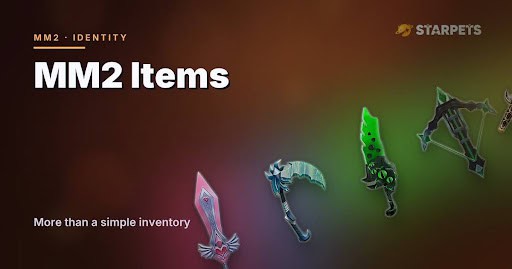
MM2 Items: Why Murder Mystery 2 Collecting Feels Bigger Than a Simple Inventory
MM2 items matter because Murder Mystery 2 is not built only around who wins the round. The knife, gun, effect, pet, and set a player carries also say something about how long they have played, what they trade for, and what kind of style they want in the lobby. Some items are common enough to feel casual. Others become talking points before the round even begins. For a gaming audience, that is the real appeal: the items create a second layer of play around collection, identity, and risk.
Why mm2 items are more than round rewards
A new player usually notices the mystery first: who is the murderer, who is the sheriff, and who is trying to stay alive without looking suspicious? After a while, the inventory starts to matter too. Not because a rare knife automatically makes someone better, but because it gives the player something personal to build between rounds.
That is where an mm2 shop can enter the conversation naturally. StarPets presents MM2 as a marketplace category for in-game items, and its help pages describe item withdrawal, buyer and seller ratings, balance top-ups, and game account requirements for selling items. For players who already understand the game loop, the useful part is seeing knives, guns, pets, and other collectibles organized outside the chaos of random trading.
| Inventory habit | What it changes in play |
| Keeping only random drops | The collection grows without much direction |
| Building a matching set | The player starts shaping a visible style |
| Trading for one rare item | The inventory becomes more concentrated |
| Checking item demand first | The player avoids rushing into weak trades |
The important point is simple. Items do not replace the match. They give the match a social frame.
How mm2 items create player identity
In many Roblox games, cosmetics are not silent. Other players notice them. A knife effect can make a round feel louder. A recognizable gun can make a sheriff stand out. A pet may not decide the outcome, but it can make the player easier to remember.
This is why mm2 items often work like a profile without a profile page. A player who uses a clean, simple loadout may be sending a different signal from someone who stacks bright effects and rare pieces. Neither choice is wrong. It is taste.
There is also a collection rhythm. Some players chase one high-value item. Others prefer a wider inventory with several mid-tier pieces. A third group builds around color, event history, or nostalgia. That variety keeps Murder Mystery 2 from feeling like a single straight path.
Players usually collect MM2 items for different reasons:
- Visual style
- Old event history
- Trade flexibility
- Matching sets
- Personal attachment to one item
What makes Murder Mystery 2 items feel valuable
Item rarity alone does not define its value. Rarity is important, but it does not tell the whole story. A rare item which is not wanted will often carry less weight than a common item which is more attractive, matches a popular set, or has more event history.
| Value factor | Why players care | Common mistake | Better choice |
| Rarity | Harder items feel more special | Assuming rare always means wanted | Compare rarity with demand |
| Demand | Popular items trade faster | Ignoring how tastes change | Watch interest over time |
| Visual style | Effects and colors change the look | Choosing value over personal taste | Keep items you enjoy |
| Set potential | Matching pieces feel complete | Overpaying just to finish a set | Leave room for future trades |
This is where mm2 items become interesting as a small game economy. The same item can mean different things to different players. One person sees trade value. Another sees a piece of an old event. Someone else only wants it because it matches their avatar.
One of the best ways to know when to make an exchange is to consider three main things about it: the level of interest of the player in the object, the frequency of interest in this object among other people, and the cost of obtaining it. If one of these is not clear, it’s better not to proceed.
How trading changes the way players look at mm2 items
Trading can make a normal inventory feel active. A player is no longer waiting only for drops or events. They are comparing items, reading the room, checking whether demand is rising or cooling, and deciding how much risk they want to take.
It can also make players impatient. A new player may trade several decent pieces for one item because it looks impressive in the moment. Later, they realize the collection became smaller and less flexible. Another player may chase whatever is currently being talked about, even if the hype fades quickly.
That is why items in MM2 should be treated as part of the fun, not a reason to rush. Good trading starts with knowing what an item means to the player. If the goal is style, the “perfect” trade may not be the highest-value one. If the goal is building toward a rare piece, smaller steady trades may be better than one dramatic swap.
A good inventory should make the game more enjoyable, not turn every lobby into pressure.
A safer checklist before changing your inventory
MM2 trading is most enjoyable when players slow down enough to understand what they are giving away. A quick checklist helps:
- Check whether the item fits your actual play style.
- Compare the trade with similar items, not only one offer.
- Avoid trading several useful pieces for one item you barely know.
- Keep at least part of your inventory flexible.
- Do not rush because another player says the offer will disappear.
- Save screenshots or notes for important trades.
- Step away if the trade feels confusing or pressured.
This does not remove every risk. It does reduce the common mistake of treating a shiny offer as a smart one.
Why mm2 items keep the game alive between rounds
Murder Mystery 2 has a simple core loop, and that is part of its strength. Each round is quick, readable, and easy to rejoin. The inventory layer gives players something to think about when the round ends.
MM2 items turn waiting time into collection time. Players compare loadouts, talk about trades, remember older events, and decide what they want next. That social layer is why the item economy matters even when the match itself still depends on movement, timing, suspicion, and good decisions.
For GBHBL readers, the appeal is close to what keeps many long-running games alive: the best communities build stories around small details. In Murder Mystery 2, those details often sit inside the inventory. A knife, a gun, an effect, or a pet may look like a small digital object, but in the lobby it can start a conversation, mark a player’s history, or give one more reason to play another round.
FAQ
Why do MM2 items matter beyond just winning rounds?
In Murder Mystery 2, the items a player carries communicate style, time investment, and trade history to other players before a round even starts. The inventory becomes a second layer of play built around identity and collection rather than match outcomes.
How do MM2 items help players build an identity in the game?
A knife effect, a recognizable gun, or a visible pet can make a player stand out in the lobby and easier to remember. Players who use a clean simple loadout signal something different from those who stack effects and rare pieces. Neither is wrong. The choice reflects taste.
What makes an MM2 item feel valuable beyond rarity?
Demand, visual style, event history, and set potential all affect how valuable an item feels in practice. A rare item with low demand may be harder to trade than a less rare item that many players recognize and request. Rarity is the starting point, not the full answer.
How should players decide when to trade MM2 items?
Consider three things: how much you want the item you are getting, how frequently other players want the item you are giving up, and how difficult the item would be to obtain again. If any of these is unclear, it is usually better to wait before deciding.
What makes Murder Mystery 2 item collecting sustainable long-term?
A clear purpose for the collection. Players who know what they are building toward make slower and more consistent decisions. They are less affected by short-term hype and less likely to empty the inventory for a single item that may lose attention quickly.