Interview: Getting to Know Don’t Tell John (Written)
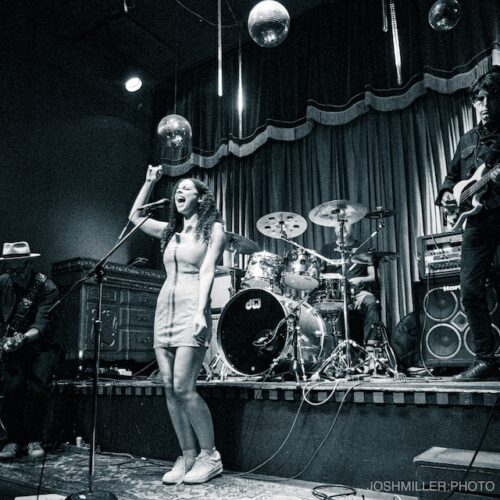
Bay Area bloodline rock & soul band Don’t Tell John are back with their new single, ‘Again’. In this interview, we get to know them a little better.
1. Hello! Thank you for taking the time to chat to us. First things first, tell us a little bit about yourself and how you got started.
We call ourselves a Bay Area, multigenerational, bloodline rock and soul band. Two brothers — Mark and Jack started playing together as kids decades ago, fronting bands through the ’90s. They hadn’t played together in years, but like so many transformations, the pandemic brought everyone back to the same room. Then Mark’s daughter Veronica stepped up and blew us all away with her vocals, and William joined on guitar, locking it all in sonically. Soon after, old friends from those ’90s bands Eric on guitar, Scott on bass, and Jon P. on congas — came aboard, and voilà: Bloodline Rock & Soul.
2. Someone comes to you and asks you to sum up what kind of music you play – what do you tell them?
We usually say Bloodline Rock & Soul, though not everyone knows what that means. Some fans have called us a “female-fronted Soundgarden,” which we take as a seriously impressive compliment. It’s rock with grit, soul with weight, and honesty at the center. The vocals are raw and powerful, the guitars are heavy and emotional, and everything we do comes back to connection family, roots, and real instruments in a room pushing air.
3. What’s currently keeping you busy?
Right now we’re promoting our recent singles “Grandad” and “Hard Luck,” while rolling out new songs like “I’m Done” and “Again.” Each one reveals a different side of us — the haunting, the hopeful, the reckless, and the redemptive. We’re also building a grassroots movement on TikTok and Instagram where fans tell us what cities they want us to play next. It’s turned into this living, breathing map of energy across the country.
4. What is it about this current period that is particularly exciting for you?
We’re really appreciating our community. We’ve seen real growth on Instagram and TikTok, with people from all over the country, and the world, reaching out and connecting with us. It’s an incredible feeling when people appreciate your music and engage. We love answering DMs and comments, and it’s surreal getting to know people who only know us through our songs. That kind of connection is humbling, and we don’t take it for granted.
5. Tell me about the work that has gone into making it a reality and what it means to you.
We record everything ourselves in a small studio Mark built, surrounded by vintage amps, real drums, and gear we love. Everyone contributes, writing, rehearsing, gigging, hanging out, recording, then doing it all again. Good thing we actually like each other. Behind every song are nights of trial and error and hours spent dialing in tones until it just feels alive. That’s the reward for us, when the sound breathes.
6. Making music can be good for the mind. In what way has it had a positive impact on your mental health?
Music is how we process everything. When life hits hard, we play louder. Writing turns grief into beauty; rehearsal turns anxiety into rhythm. Being a multigenerational band gives us perspective, we remind each other that creativity doesn’t have an expiration date.
7. It can also be incredibly challenging. What have been some challenging aspects and how have you overcome them?
The same stuff every band faces, really. Keeping a band together across generations means balancing schedules, opinions, and musical instincts that come from different eras. Add to that the modern reality of content cycles and algorithms, and it’s a lot. We’ve learned to protect the creative core, to always make music first, then translate it outward. That keeps us grounded.
8. How do you handle the online aspects — constant content, promotion, and metrics?
We treat social media like another stage. It’s actually a gift, a creative way to connect with people. Sure, the platforms can feel relentless, but we love being able to invite fans into rehearsals, show snippets of gigs, and share behind-the-scenes moments. The same way we connect with a crowd in a club, we try to connect through the phone screen. Likes and follows are nice, but the real impact comes when someone comments, “This song got me through something.”
9. How do you make that part enjoyable and fulfilling?
It’s a lot of work, but also a lot of fun. We’ve turned it into storytelling: weekly carousels about vintage gear, clips from rehearsal, and fans dropping pins on a map asking us to play their town. When you see it as connection instead of marketing, it becomes meaningful again. It’s not promotion, it’s a conversation.
10. Speaking directly to listeners – what would you ask they do to help support you?
If you love a song, save it, share it, comment on it, and tell a friend. That’s how people can really support us. Sure, buy the merch, come to shows, we love that, but engagement matters more than people realize. We’re still at a level where we can talk to everyone who reaches out, and we love that. Every click, comment, and share means a lot, not just to us, but to the algorithm too. Engagement tells both the algorithm and the universe that you care. Every small act adds fuel to this fire we’re building together.
11. Outside of music, what do you like to do to relax?
Most of us are vintage gear nerds, guitars, amps, and old cars. There’s something meditative about bringing old machines back to life. But we do regular stuff too: read sci-fi, talk movies, head up to Tahoe to swim, or just hang out together. It’s a friends-and-family band, after all.
12. Where can people find you?
Everywhere music lives.
Website | Spotify | Instagram | X | YouTube