Interview: Mimi Barks – An Unstoppable Rise, Dreamstate of Fear, and Being Totally Authentic
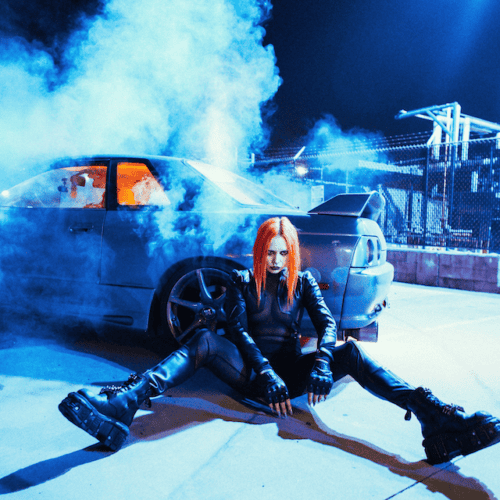
Mimi Barks is an artist that should need little introduction. Having emerged from the underground of Berlin to showcase her unique style of music, and drawing in fans from all over the world. Mimi epitomises what it means to be an experimental artist, creating a sound and identity entirely her own. Rooted in the collision of metal, industrial energy, and trap, her music is emotional, heavy, and unfiltered, while her live shows have already taken her to major stages across the UK and Europe.
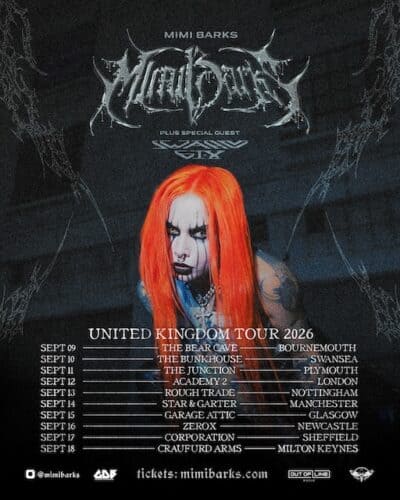
On July 24th, her new EP ‘Dreamstate of Fear’ will be released. As well as making appearances at festivals throughout the Summer, Mimi will return to the UK in September for an extensive headline tour.
Thank you for your time. It is an absolute pleasure. How is everything in the world of Mimi Barks right now and what is helping keep you sane in such a busy period?
To be honest, it’s the opposite. I feel less sane when things are quiet. Mundane life scares me. Stagnation scares me. Touring, creating, releasing music, that’s the essence of life in my opinion. If I was stagnant I might as well be dead.
Right now I am exactly where I need to be. Moving, creating and bringing Dreamstate of Fear into the world.
What does an average day in life of Mimi Barks look like and are you able to disconnect from the world of music easily enough?
I don’t really differentiate between the artist and the person, so there isnt an average day in that sense. Mimi Barks isnt something I switch on and off. It’s not a character I play, it’s simply an extension of who I am. Some days are spent writing music, others designing physical products, writing music video concepts, rehearsing, travelling or dealing with the business side of things. I don’t really disconnect from it because the project extends far beyond music itself. It’s part of how I experience life.
With the dust beginning to settle on THIS IS DOOM TRAP, are you satisfied with how it has been received overall and what opportunities have come your way from its success?
I don’t think I’ll ever be satisfied. Satisfaction sounds a little too close to stagnation for me. I’m constantly evolving, moving and looking toward the next thing. THIS IS DOOM TRAP was an important chapter but my attention is already fully immersed in building the next world.
At the same time, I’m trying to become better at appreciating the process rather than obsessing over the outcome. It’s easy to become fixated on destinations, milestones and achievements, but the reality is that the journey is the whole point.
Are there any particular moments or experiences that stand out from the THIS IS DOOM TRAP period?
One thing that really stands out is how global that entire era became. Looking back, I realized I shot almost every music video in a different city, country or even continent. Mirtazapine was filmed in Seattle. Final Destination/Death Without Satisfaction moved between Seattle and Berlin. Wormgirl was shot in Los Angeles. Montana with Ho99o9 was filmed in Berlin. House Full of Fakes in West Germany. FSU in London. Banshee in Scotland. Disgusted became a compilation of live footage from shows all over the world.
Looking back now, THIS IS DOOM TRAP feels like a document of constant movement. Different countries, different stages of my life, different versions of myself all captured throughout one record cycle.
How soon after THIS IS DOOM TRAP did you start to think about what would come next?
I usually need to fully finalize one project before I can focus on the next. For me, a record isn’t just the music, it’s the creation of an entire world around it. The visuals, videos, artwork, physical products, live show, all of it belongs to the same universe.
The touring cycle after a release usually gives me the distance from the writing process that I need. Being on the road, meeting people, seeing new places and experiencing the songs in a live environment allows me to disconnect from the record itself and gather new inspiration. That’s usually when the seeds for the next chapter begin to appear.
Did you have a clear vision for what the next stage looked like and the direction you would be heading in?
Not really, I don’t work from a strict blueprint. I follow intuition more than strategy. The themes reveal themselves during the process rather than before it.
What was particularly exciting about moving on from THIS IS DOOM TRAP?
The freedom to explore new territory. I never want to repeat myself. If I’m not evolving, I lose interest.
What do you think the new EP, Dreamstate of Fear, says about Mimi Barks and where you are going, musically?
It shows a broader emotional range. There’s more melody, more singing, more contrast within the music, but also some of the heaviest material I’ve written.
Has the evolution in sound that the EP displays come quite naturally and how have the events of the past few years helped shape it?
The evolution happened completely naturally. After THIS IS DOOM TRAP, I wrote an entire album that was ultimately stolen. Recovering from that took a long time, and for a while I was genuinely on the verge of giving up music altogether.
Ironically, Dreamstate of Fear was born out of that loss. Once the album was gone, so was a lot of the pressure I had been putting on myself. I had already stepped away from music mentally, so when these songs started appearing there were no expectations attached to them anymore. Nothing about this record was forced.
It’s a project shaped by grief, loss, acceptance and transformation. In many ways, it’s a testament that giving up was never really an option. The sound simply became whatever it needed to become in order to express that journey honestly.
What do you hope listeners take away from the record?
The record is primarily for me. But if people see parts of themselves in it, maybe they’ll realise that who they were yesterday doesn’t necessarily have to dictate who they become tomorrow.
Have you been surprised by how your music, and you as a person, have been embraced by so many different communities?
Not really. At the heart of it, the music is built on emotion and authenticity and those are things every human being can relate to regardless of what genre they’re into.
I’ve never seen music genres as separate entities competing against each other. People might arrive through metal, rap, techno, punk or electronic music, but underneath all of that they’re responding to the same thing. If something feels real, people connect with it. That’s always been more important to me than genre.
What is about Mimi Barks that appeals to so many different people, do you think?
Whether people love it or hate it, they can tell it’s real. Nothing is manufactured. Everything comes from a genuine place.
What excites you about the future of Mimi Barks?
The fact that I have no idea where it’s going. The moment I think I’ve figured it out, something unexpected happens. I fully trust the process and I know everything happens for a reason in its own divine timing, it’s like co creating with the universe instead of life happening to me.
Aside from creating the music, where else do you derive creative satisfaction?
Visuals. Artwork, fashion, videos, stage design, physical products. Visual aesthetic and musical output are fiftyfifty for me. They’re inseparable.
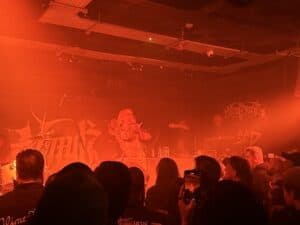
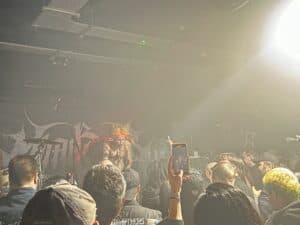
Mimi Barks on record is one thing; Mimi Barks live is another. Always a special experience. What do you get out of performing live?
Presence. For that hour, nothing else exists. It’s one of the few places where the mind goes completely silent and everybody in the room is experiencing the same moment together. That’s the most powerful thing and the essence of being a musician.