
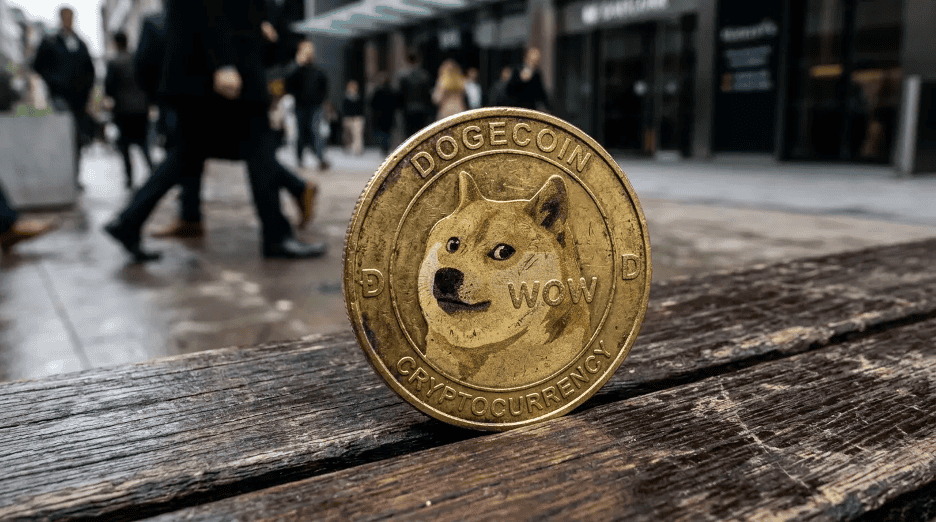
Dogecoin’s Big Jump: How a Meme Coin Became the Crypto Event That Surprised Everyone
Back in December 2013, two engineers decided to create a cryptocurrency as a joke. Billy Markus, a programmer from Oregon, and Jackson Palmer, a marketer from Adobe’s Sydney office, took the famous Shiba Inu “doge” internet meme and turned it into a digital coin. The whole idea was to poke fun at the growing number of dead-serious crypto projects popping up at the time. Neither of them expected anyone to care. And for the first several years of dogecoin history, most people didn’t.
The price sat at fractions of a cent for years. Whole communities formed around it on Reddit and social forums – funny, generous, and genuinely unbothered by the fact that their coin had no real monetary value. In 2014, the community crowdfunded enough to send the Jamaican bobsled team to the Winter Olympics. The coin was widely used for tipping content creators online. It was goofy and pure internet energy. Who could have guessed that a Shiba Inu meme would one day rival hundred-billion-dollar assets?
But crypto has a way of rewriting people’s expectations.
And the coin does have real, everyday uses. Low fees and fast transactions make it practical for small payments, tips, and entertainment spending. Some players use DOGE on BetFury for online gaming without converting to anything else first. That kind of direct utility probably matters more than most hype-driven narratives suggest.
From Half a Cent to Front Pages
The year 2021 started with DOGE worth about $0.005. Half a cent. You could get 200 coins for a dollar, and most people still wouldn’t have bothered.
What changed everything was timing. The GameStop frenzy on Reddit had just shown the world that internet communities could move financial markets. People were hungry for the next wild trade. Dogecoin was sitting right there – cheap, widely listed on trading apps, and backed by an enthusiastic community. Online groups started coordinating buys and flooding social media with memes. The price moved. More attention followed. And within weeks, DOGE had gone from a weird internet thing to something people were discussing everywhere. January 2021 alone saw price gains of hundreds of percent, and that was only the opening act.
Elon Musk and the Power of a Single Post
No honest account of Dogecoin skips one name.
How Celebrity Attention Became a Price Driver
Musk had mentioned the coin casually before 2021, but things accelerated fast that January. On January 28, 2021, he posted “Dogecoin is the people’s crypto” on X (then Twitter). The price jumped about 60% within hours. One post. Then on April 1, 2021, he wrote that SpaceX would put a “literal Dogecoin on the moon,” and the price climbed over 20% in a single day.
Anyone tracking elon musk dogecoin news during this period watched something strange unfold. A social media post from one person was moving a multi-billion dollar asset more sharply than most corporate earnings reports move stocks. It wasn’t just nudging sentiment – it was triggering buy orders in real time. The feedback loop was hard to miss: he posted, the price moved, more buyers came in, and even more people started watching his account. So it happened again, and again, and again.
The Night the Price Hit Its Ceiling
The biggest moment came on May 8, 2021. Musk was scheduled to appear on Saturday Night Live, and weeks of hype had already pushed prices to levels most analysts didn’t see coming. Traders were piling in. The dogecoin all time high of $0.7376 was recorded that very night.
To understand how extraordinary that number was: DOGE had started 2021 at $0.005. In five months, it gained over 15,000%. Not a typo.
Then, live on air, Musk described crypto as “a hustle.” The price collapsed. Over 43% gone in two days. People who bought near the top watched their holdings shrink almost immediately. The crash was fast and hard, and it made one thing very clear – when a coin’s price relies heavily on one person’s public comments, the downside can arrive just as quickly as the upside. But even after the drop, something had shifted permanently. At its peak, DOGE had briefly become the fourth-largest cryptocurrency in the world by market cap, sitting above projects with far more technical depth and developer backing.
What Actually Drives Dogecoin’s Price
Dogecoin doesn’t have smart contracts. It doesn’t have a large developer ecosystem or complex tokenomics. So why does it keep surviving?
A few factors probably explain it. Community sentiment seems to matter more here than with almost any other coin. People who hold DOGE don’t tend to cite white papers or protocol upgrades. They cite the community, the memes, and the culture that’s been building since 2013. That might sound unserious, but it’s kept the coin alive through multiple brutal bear markets when hundreds of other projects simply vanished. Low fees and wide exchange support don’t hurt either.
| Price Driver | Typical Impact |
| Celebrity and public figure posts | Fast, sharp short-term spikes |
| Community and social media trends | Strong momentum for days or weeks |
| Broader crypto market cycles | Sustained moves in either direction |
| Real-world adoption | Slow, steady background support |
The 2024 Comeback Nobody Predicted
Most people assumed the 2021 run was a one-time fever dream. Then 2024 surprised everyone.
When Donald Trump won the U.S. presidential election in November 2024, he announced that Elon Musk would lead a new government initiative called the Department of Government Efficiency. The acronym was DOGE. Whether intentional or not, markets didn’t pause to think about it. The coin surged 115% almost overnight, hitting a 52-week high around $0.47. And elon musk dogecoin news was everywhere again, this time mixed with political headlines and late-night jokes about government spending.
DOGE closed 2024 up roughly 300% for the year. Driven by a government department name. Not a protocol upgrade. Not a new partnership. A name.
Where Dogecoin Stands Today
By mid-2025, much of that excitement had cooled. Post-election hype faded, and DOGE pulled back hard as broader altcoin sentiment weakened across the whole market. The price settled around $0.10-$0.11 – well below the dogecoin all time high, but still a long way from the tiny fractions of a cent it was worth before 2021.
Does that mean the big moves are done? Probably not, if the pattern holds. Dogecoin seems to run in waves – long quiet stretches followed by sharp explosions triggered by events that don’t follow typical investment logic. A tweet, a Reddit thread, a government acronym. The triggers aren’t predictable. They might not even be crypto-related at all.
What makes DOGE different from most digital assets is that its community was real before the price ever mattered. The tipping culture, the charity campaigns, the warmth of a group built around a dog meme – all of that existed long before anyone talked about market caps. Whether that foundation is enough to carry the coin into its next chapter is something serious analysts still can’t agree on. Some think $1 is possible. Others see the big catalysts fading. And some people hold it simply because it’s the most fun community in crypto, which is probably as valid a reason as most.
What the full dogecoin history makes clear is simple: don’t assume you know what this coin does next.