The Sonic Geometry of Silence: Why the Welsh Valleys are the Ultimate Muse for the Alternative Creator
In the relentless, high-frequency cacophony of 2026, the alternative creator—the musician, the horror writer, the dark-aesthetic developer—faces a unique challenge: the death of silence. We live in an era of “Algorithmic Noise,” where every digital interaction is designed to occupy the subconscious. For those who trade in the heavy, the atmospheric, and the extreme, this constant saturation is the enemy of authentic output. To find the “Brutal Muse,” one must physically retreat from the grid.
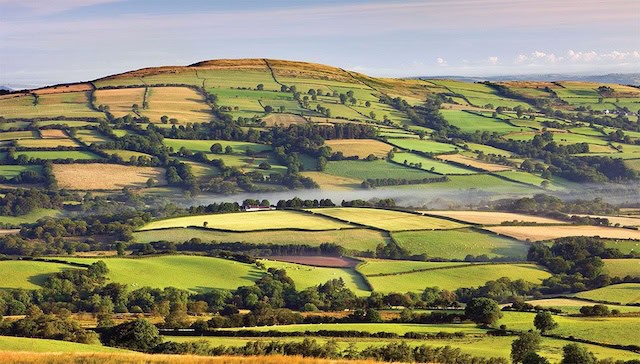
We are seeing a profound resurgence in the “Black Metal” approach to creativity—a deliberate withdrawal into the rugged, the isolated, and the desolate. While the Scandinavian forests have long been the spiritual home of this movement, in 2026, the focus has shifted toward the ancient, brooding topography of Wales. The Welsh wilderness offers a specific kind of “Sonic Geometry”—a landscape of deep valleys, mist-shrouded peaks, and slate-gray coastlines that provide the perfect aesthetic and psychological backdrop for dark artistic exploration.
The Aesthetic of Dread: Landscape as a Narrative Tool
For the horror enthusiast or the dark-ambient composer, environment is not merely a background; it is a primary instrument. The psychological concept of “Dread” requires a specific environmental trigger: a sense of vastness combined with the claustrophobia of the unknown. The Welsh landscape, with its sudden shifts from expansive moors to narrow, steep-sided valleys, embodies this duality.
In 2026, creators are moving beyond the “Studio” model. The high-fidelity portability of modern recording and rendering gear means that a stone cottage in Snowdonia or a secluded lodge in the Brecon Beacons can become a world-class production hub. The environment bleeds into the work—the rhythmic battering of rain against slate, the low-frequency moan of wind through a mountain pass, and the absolute “Blackout” of a rural night. This is “Environment-as-Source-Material,” and it is driving a new wave of visceral, site-specific art.
The Failure of the Commercial Experience
For the alternative community, the traditional “hospitality” industry is fundamentally at odds with the creative process. Hotels and managed resorts are engineered for “Consumer Comfort”—bright lights, forced social interaction, and a sanitized aesthetic. For someone attempting to tap into the “Brutal Beauty” of isolation, these environments are high-friction zones.
The alternative creator requires Autonomous Sovereignty. This is why the shift toward high-end, self-contained properties has become the standard for the 2026 creative retreat. By taking over a private dwelling, the creator gains total control over their sensory input. There are no housekeeping interruptions, no “lobby music,” and no judgment when a guitar cabinet is pushed to its breaking point at 3:00 AM. This level of agency is essential for reaching the “Flow State” required for extreme creative output.
Technical Specifications of the Dark Sanctuary
A creative sanctuary in 2026 must be more than just “quiet.” It must be technically capable of supporting a high-fidelity workflow while maintaining its atmospheric integrity. When scouting for remote Welsh wilderness escapes, the alternative professional looks for a specific set of variables:
- Acoustic Mass: Thick stone walls—a staple of traditional Welsh architecture—provide natural sound isolation and a unique “room character” that digital plugins cannot replicate.
- Infrastructure Stability: In 2026, even the most isolated valley must offer the symmetrical connectivity required to push 24-bit audio files or high-poly renders to a global team.
- Low-Light Ergonomics: Spaces that can be easily “dimmed” or themed with specialized lighting to maintain the necessary mood for horror writing or dark-synth production.
- Thermal Resilience: A roaring fire is not just a cliché; it is a functional requirement for maintaining cognitive focus during the damp, brutal winters of the Welsh uplands.
The Ritual of Isolation: The “Self-Catering” Edge
The “Self-Catering” model is often misunderstood as merely “cooking for oneself.” In the context of a 2026 creative retreat, it is a Ritual of Independence. The ability to control one’s nutrition—moving away from processed corporate food toward high-protein, artisanal local produce—is a key component of physical and mental performance.
Preparing a meal in a high-end kitchen in the middle of a Welsh valley becomes a meditative reset. It provides a necessary break from the “Digital Void” of the screen or the instrument. This autonomy allows for a “Deep Work” schedule that follows the individual’s own circadian rhythm rather than a hotel’s breakfast hours. Whether you are a solo developer or a full four-piece band, the shared experience of living in a self-contained environment fosters a level of “Dark Synergy” that is impossible to achieve in a commercial space.
Geospatial Analysis: Why the Valleys Scale Innovation
There is a measurable ROI for the alternative professional who invests in isolation. Data from the 2026 “Creative Economy” reports show that work produced in “Isolated High-Fidelity” environments has a significantly higher retention rate and emotional impact. The brain, when removed from the urban “Survival Mode” of constant surveillance and noise, begins to operate in a more expansive, lateral capacity.
In Wales, this is amplified by the “Historical Weight” of the land. The presence of ancient ruins, iron-age hillforts, and the remnants of industrial slate mines provides a tangible link to the past—a “Mnemonic Architecture” that feeds into the dark-alternative narrative. It is a place where the barrier between the modern world and the ancient dark feels thin, and for the creator, that is where the most potent work is found.
Conclusion: Returning to the Dark
As we navigate the second half of the decade, the demand for “Authentic Isolation” will only continue to grow. The alternative creator is the “Canary in the Coal Mine” for the broader culture; their move toward the Welsh wilderness is a signal that we are reaching a breaking point with managed, digital-first living.
The Welsh landscape provides the perfect “Negative Space” for the creation of new worlds. By prioritizing autonomous luxury and technical rigor in the middle of nowhere, the creators of 2026 are setting a new benchmark for excellence. In the end, the most powerful work is not produced in the center of the world, but on its rugged, rain-swept edges.