Horror Movie Review: 28 Years Later (2025)
How about that ending, eh? It really doesn’t get more polarising than that now, does it? No spoilers, but I’m a fan of it, but not because I see anything that you don’t. I liked it because it was different and in a world of rehashes, remakes and re- releases, different can be good, even if it’s not to everyone’s taste.
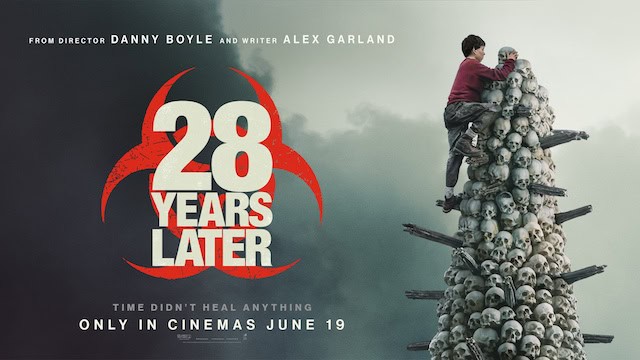
Written by Alex Garland and directed by Danny Boyle, 28 Years Later is the much anticipated third film in the ’28 Days Later’ film series. A film that fans have been crying out for ever since 28 Weeks Later, in 2007, revealed that the infection had reached mainland Europe, before ending. How intriguing!
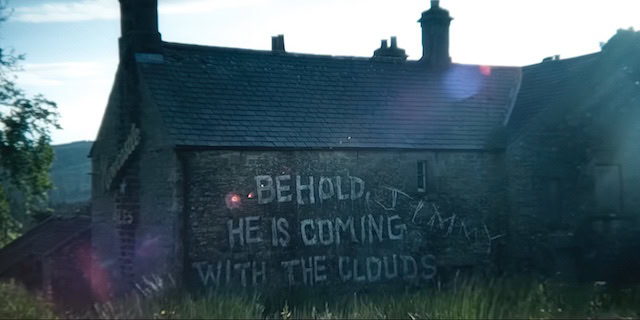
Alas this is not an idea that is followed up on (in fact, it’s removed entirely with a simple line) and instead, the focus returns to mainland Britain, now quarantined completely. Why? In 2002, a virus that turned humans into violent and animalistic monsters decimated the country. It was called the ‘Rage Virus’, and once again, we see its devastating effects in an opening that is set during the initial outbreak. A truly horrifying start that reminds viewers of the series’ bleak tone.
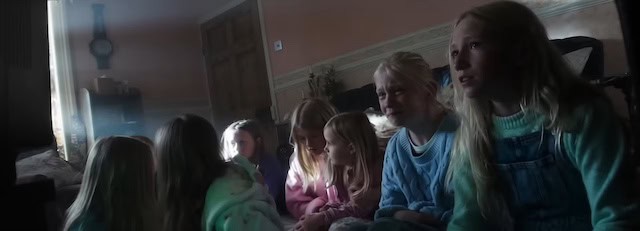
It is a strong start and suggests that we’re going to see more of the same, but as the film shifts to 28 years later, that proves not to be the case. Lindisfarne is a small tidal island connected to mainland Britain by a fortified causeway. There, a community lives in peace, surviving on what they can grow and scavenge from the mainland. Trips out are few and far between but necessary, especially as a ‘coming of age’ ritual for young boys.
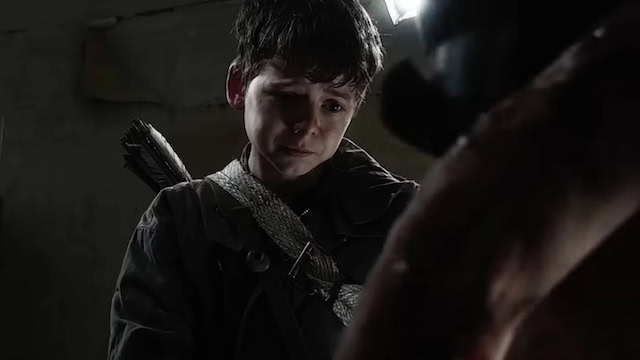
Spike (Alfie Williams) is the latest young boy to take a trip to the mainland, alongside his dad, Jamie (Aaron Taylor-Johnson). The goal? See what they can find, and if they’re lucky, get Spike an infected kill or two.
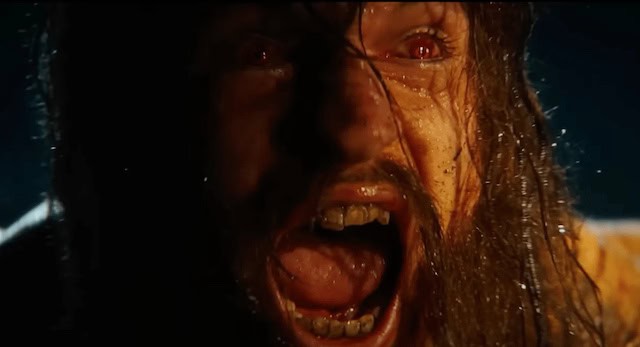
Unluckily though, their time on the mainland does not go as well as expected as they have to deal with many more infected and get the attention of an Alpha, a mutated version of the infected. Bigger, faster, and so much stronger.
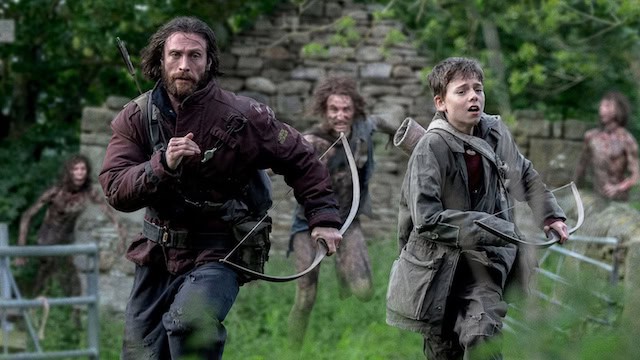
They are able to survive and make it back home safely, where Spike is heralded as a hero, even though he doesn’t feel like one. He was scared and isn’t happy to see his father embellish the story of their time on the mainland, nor is he happy to see his father kissing another woman in an alleyway, not when his mother, and Jamie’s wife, is sick in bed at home.
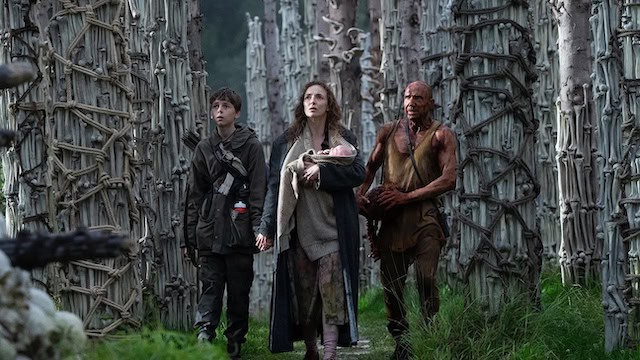
This is Isla (Jodie Comer) and she is suffering from an unknown disease that causes her a lot of physical pain and makes her forgetful – almost like she has dissociative states. Spike is scared for her, so when he hears of an old doctor (Ralph Fiennes) who lives on the mainland, he makes a decision. He’s going back with his mother to find this doctor, even if the stories about him suggest he might be more dangerous than the infected.
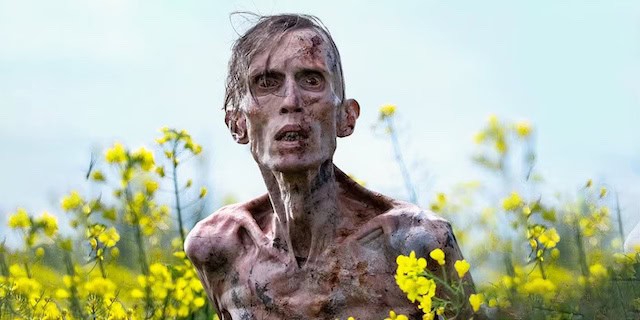
28 Years Later is not the film you might expect it to be, and it is all the better for it. Even if it will likely result in some disappointed faces. It would have been so easy for Boyle and Garland to just redo 28 Days/Weeks Later, add in some ham-fisted metaphors and throw in some crowd-pleasing cameos, but instead they’ve actually tried to tell a different story, focus on characters, and look at the infected from a more ‘human’ perspective.
This results in some genuinely strong scenes that are filled with horror, create suspense, have moments of beauty and deliver emotion. The latter of which is at its most potent during scenes between Alfie Williams’ Spike, Jodie Comer’s Isla, and Ralph Fiennes’ Dr. Ian Kelson. The trio are fabulous, and it is incredible that it is the former’s debut feature film, but there can be few complaints about the cast overall. I particularly found Aaron Taylor-Johnson’s Jamie to be an interesting character who I hope is explored further in the sequel (it’s a planned trilogy).
Likewise, the story, while disjointed in places, is compelling and told in enjoyable fashion. By focusing on the ‘coming of age’ aspect, it helps localise things and make the story feel somewhat complete by the end. Sure, you can tell there is more to show and say here, but viewers won’t be left wanting, come the end.
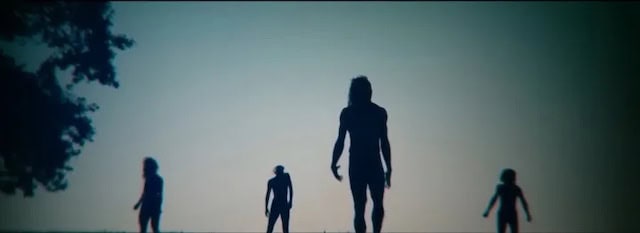
Cinematographer Anthony Dod Mantle, who worked with Boyle and Garland on 28 Days Later returns, and you can tell. This film looks amazing, creating both a sense of serenity and dread. By filming in such an isolated, but lush, location, the film is able to show a post-apocalyptic Britain on a smaller, but more realistic scale. It’s easy to look at this film and believe that it could happen and/or be going on right now, especially if you’re a city-dweller.
Just like the previous two entries, 28 Years Later feels real, up to a point. Which brings me to the negative parts of the film, which mostly stem from the disjointed story and moments of extreme horror that are at odds with the more realistic aspects of the film. Least of all, the absurd ending. Nothing here ruins the film, and it is easy to forget that both 28 Days Later and 28 Weeks Later had issues to, but the ones here are notable enough.

28 Years Later is not the film you think it is, and I reiterate, it is better for it. Perhaps some did just want 28 Days/Weeks Later again, but I didn’t. This is a fresh and bold offering that speaks strongly of the talent involved. It’s far from perfect, but it has turned out so much better than anyone could have expected. Roll on the next one.
Author
28 Years Later (2025)
-
The Final Score - 7/10
7/10